At this point, I don’t think it’s hyperbole to say that this is Christopher Nolan’s summer and we’re all just living in it. With The Odyssey, not only has Nolan reminded everyone yet again exactly why he is one of the most celebrated directors of our time, but the film has completely dominated the movie-going conversation. As a new father, I have very limited time nowadays to see any films but I can happily report that I have seen The Odyssey twice, somehow enjoying it even more the second time around.
In fact, I’d argue that The Odyssey is one of those movies that simply begs to be seen a second time just so you can appreciate everything that’s gone into it. The first viewing lets you enjoy the story and the spectacle of it all, but a revisit will draw your focus elsewhere and you’ll spot new things that didn’t catch your attention before, just as I did.
If you’ve got your hand hovering over the ‘Book now’ button but need a little more convincing, then here are the five things I spotted from a second viewing of The Odyssey. Be aware, I’ll be diving into spoilers here so this is only for those who have already seen the film.
Just as a side-note, because The Odyssey was filmed entirely with IMAX cameras, the film is just perfect for the medium. You can also see which movies are showing in IMAX and which Cineworld closest to you has an IMAX screen.
Odysseus’ revelation is hiding in plain sight
The central premise of The Odyssey, just like the original poems it's based on, is the journey that Odysseus undertakes to get home after giving up years of his life to follow Agamemnon’s crusade in the Trojan War. That desire to get home not only drives the narrative, but it drives Odysseus to act, or at least, you think that’s the case until his run-in with the Sirens makes him come to terms with the fact that he might not want to return home at all.
The reasoning behind that statement isn’t fully understood until right near the end of the film when Odysseus, posing as a beggar, details the true cost of what it took to win the Trojan War and that it was the very act of using the Trojan horse that led to the breakdown of civility and Zeus’ law, which in turn had emboldened the suitors who overrun Ithaca.
It’s an incredible scene, but it was only on a second viewing that I noticed just how often you see brief glimpses of Odysseus on the steps of Troy. They’re peppered throughout the film as a nod to what’s bubbling underneath the surface of Odysseus’ mind, making for a great bit of signposting for those who were paying attention.
The reason why Odysseus fights alone at the end
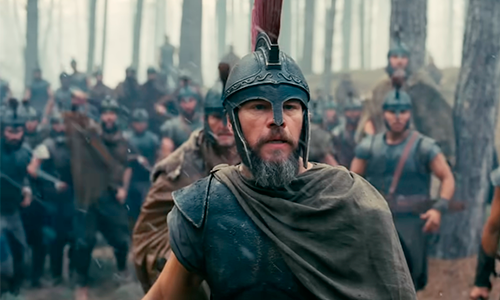
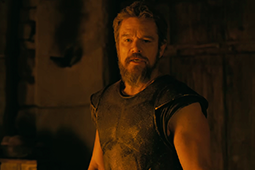
As much as I love the film in its entirety, I absolutely adore the final act of The Odyssey. The fact that it goes into a full-on John Wick-style fight where it’s Odysseus versus the suitors is just incredible. It has the kind of energy that keeps you on the edge of your seat, but it also serves as a reminder of how great Matt Damon is as an action star, bringing back memories of his time playing Jason Bourne.
Of course, Odysseus isn’t the only hero in the room as Telemachus (played by Tom Holland) is also present. Although Telemachus tries to step in, his father stops him from doing so, something which I had believed to be a parenting impulse during my first viewing, as a means of making sure that he isn’t hurt in the chaos. It was only the second time round that I understood the true importance of Odysseus needing to thwart the suitors by himself.
Not only is he fighting for his life, but it’s also his only means of reestablishing his command over Ithaca. If Odysseus needs to remind people why he should still be king over anyone else, it’s a task that he must complete himself so that there can be no doubt over his legitimacy to rule.
There are more practical effects than you think
One of the best qualities about The Odyssey is that even when it dips into the fantastical, there’s still an element of realism at play that makes it all feel grounded. A lot of this is helped by Nolan’s insistence on using real-world locations for the film as opposed to a soundstage, but what takes it to another level is how the film uses practical effects to sell a scene.
There are now plenty of write-ups about Nolan’s aversion to using CGI, alongside detailed explanations of how the film’s most defining moments were achieved. The run-in with the cyclops was shot by using a 60-foot puppet no less, while the fight with the giants was staged simply by using stand-in performers to make Odysseus and his men seem smaller by comparison.
What’s even stranger is that the scene with Cerci, which feels more like it’s been plucked from a horror film, was also accomplished through several methods of practical trickery to convince the audience that magic is unfolding in front of them. Going into the film with this knowledge only makes these moments even more impressive.
The soundtrack is the underlying hero
As I said before, the first run-through of a film is always designed so that you hone in on the story at hand, but during my second screening of The Odyssey, the first thing I realised was just how brilliantly both the score and the sound effects set the tone for everything that we see.
Whether that be Ludwig Göransson’s ‘Odysseus’ which plays over the first few minutes of the film, or the unmistakable twang that emanates from our hero’s bow, there’s just so much to dive into here. I’d recommend giving the film’s official soundtrack a listen before you go into another screening as it’s a marvel unto itself. If the soundtrack doesn’t get its due during award season then I’ll eat someone’s hat.
Yes, that is Travis Scott in the opening
This is just a fun one that completely went over my head during my first screening, but the bard at the beginning of the film, who invites us to hear the tale of Odysseus, is played by none other than rap superstar Travis Scott. It’s not just a simple cameo either as it sets forth the idea that this is a retelling of the original text designed for modern audiences, and who better to play a bard than one of the biggest artists of the here and now?





.jpg)
.png)